Auto Hail Damage Repair
AUTO HAIL DAMAGE REPAIR IN MORRISVILLE, PA
Hail reaches the damage threshold at 1 inch across, roughly the size of a quarter, and a single cell moving over Bucks County can pit a roof, hood, and trunk lid in under a minute. On Point PDR handles auto hail damage repair by mapping every panel under controlled light, then working each dent back with rods and glue tabs instead of body filler and fresh paint. Certified technicians and a lifetime warranty stand behind every finished vehicle that leaves us.


A STORM CLAIM SHOULD NOT COST YOU YOUR PAINT.
The insurance settlement often assumes a body shop, a paint booth, and two weeks of your life. Paintless repair changes that math. Because nothing is sanded or resprayed, your vehicle keeps the finish it was built with, the repair moves in days rather than weeks, and the panel count stops mattering as much as the panel condition.
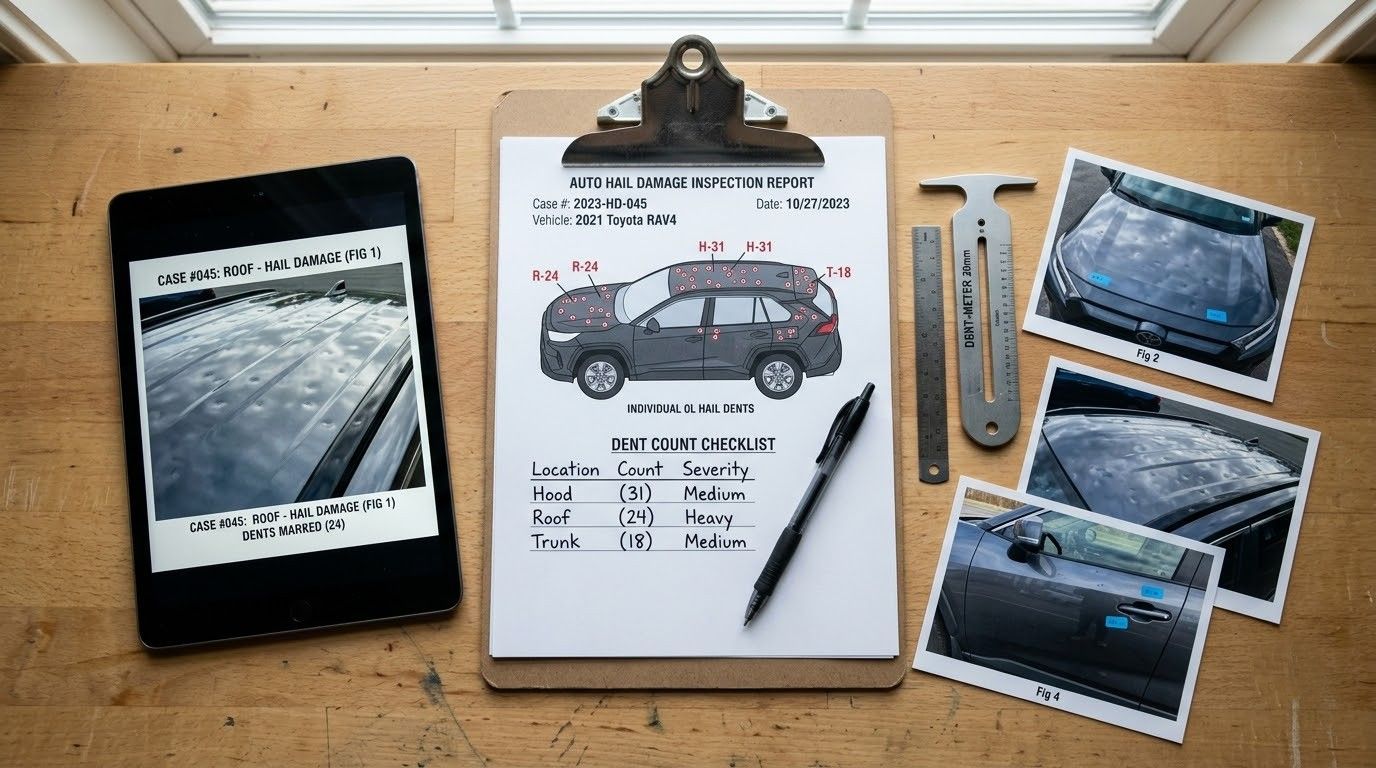
We photograph the vehicle, log every dent by panel, and give your adjuster documentation they can act on. You approve the scope and the number before a single tool comes out.
- Damage mapped panel by panel under controlled light
- Comprehensive claims started and supported end to end
- No filler, no respray, no color-match risk
- Lifetime warranty on all completed repair work
AUTO HAIL DAMAGE REPAIR
A ROOF FULL OF DENTS IS STILL A REPAIRABLE ROOF.
Drivers see a hood speckled with shallow craters and assume the panel is finished. It rarely is. Hail dents are wide and shallow by nature, which is exactly the profile paintless repair was built for, and the factory paint over them is usually untouched. What changes the answer is depth, whether the metal stretched, and whether any impact cracked the clear coat. We check all three before we quote anything.
TRI-STATE STORMS ARRIVE FAST AND LEAVE MARKS.
Severe weather rolls up the Delaware Valley on short notice, and covered parking is scarce in Morrisville, PA, Levittown, PA, and across the river in Trenton, NJ. Vehicles parked at work or in a driveway take the full hit. We stay close to home for that reason, so a storm on Tuesday does not turn into an appointment three weeks out at a shop an hour away.
WE HAVE READ MORE STORM DAMAGE THAN WE CAN COUNT.
Hail work is a counting discipline before it is a repair discipline. Miss six dents on a roof and the settlement comes up short, which is why our mapping happens under a light board rather than in a parking lot. Over 14 years we have documented hail vehicles for adjusters across the Tri-State area and learned exactly what insurers want to see. Wondering what your roof actually holds?
WHAT A PROPER HAIL REPAIR GIVES BACK
YOUR ORIGINAL FINISH
The paint your vehicle left the factory wearing stays on the panel. No blend panels, no clear coat edges, and no color that reads slightly off under afternoon sun a few summers from now.
A CLEAN HISTORY REPORT
Refinish work creates a paper trail that follows a vehicle to resale. Paintless repair does not, so a storm your car survived does not become a line item a future buyer negotiates against.
YOUR CAR BACK SOONER
Body shop hail queues run weeks deep after a storm. Working without a paint booth removes the bottleneck entirely, so most vehicles go home in days and many go home the same day.
FULL SETTLEMENT VALUE
Dents missed during assessment are dents nobody pays for. Documenting every panel under controlled light means the estimate reflects the whole vehicle, not just the damage visible from 10 feet away.
PROTECTED RESALE VALUE
Appraisers and buyers spot refinished panels quickly and price accordingly. Keeping the original surface intact means your vehicle is evaluated on mileage and condition rather than on repair history.
ONE POINT OF CONTACT
Storm season turns into a phone tree of adjusters, shops, and rental desks. Handling the documentation and the repair under one roof keeps your part of it down to sending photos and approving work.
WHAT WE REPAIR
OUR HAIL DAMAGE WORK
Storm damage lands differently on every panel, and each surface needs its own approach. Here is what a full hail repair covers on a typical vehicle brought to us after a Tri-State cell moves through.
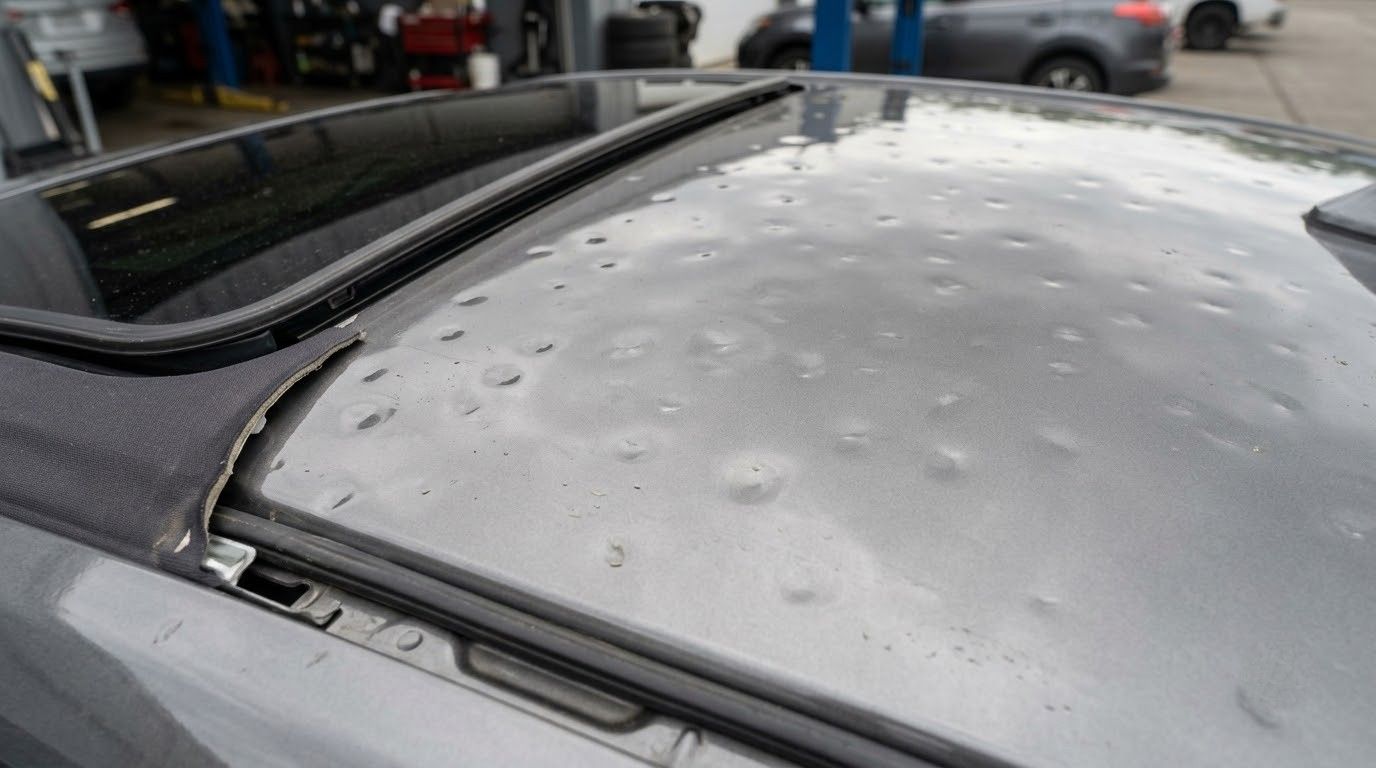
ROOF PANELS
Roof and Sunroof Surrounds
Roofs take the heaviest hail because they face straight up. Access usually means dropping headliner edges or working through existing openings, then walking dozens of shallow impacts back to level across a wide unsupported span.
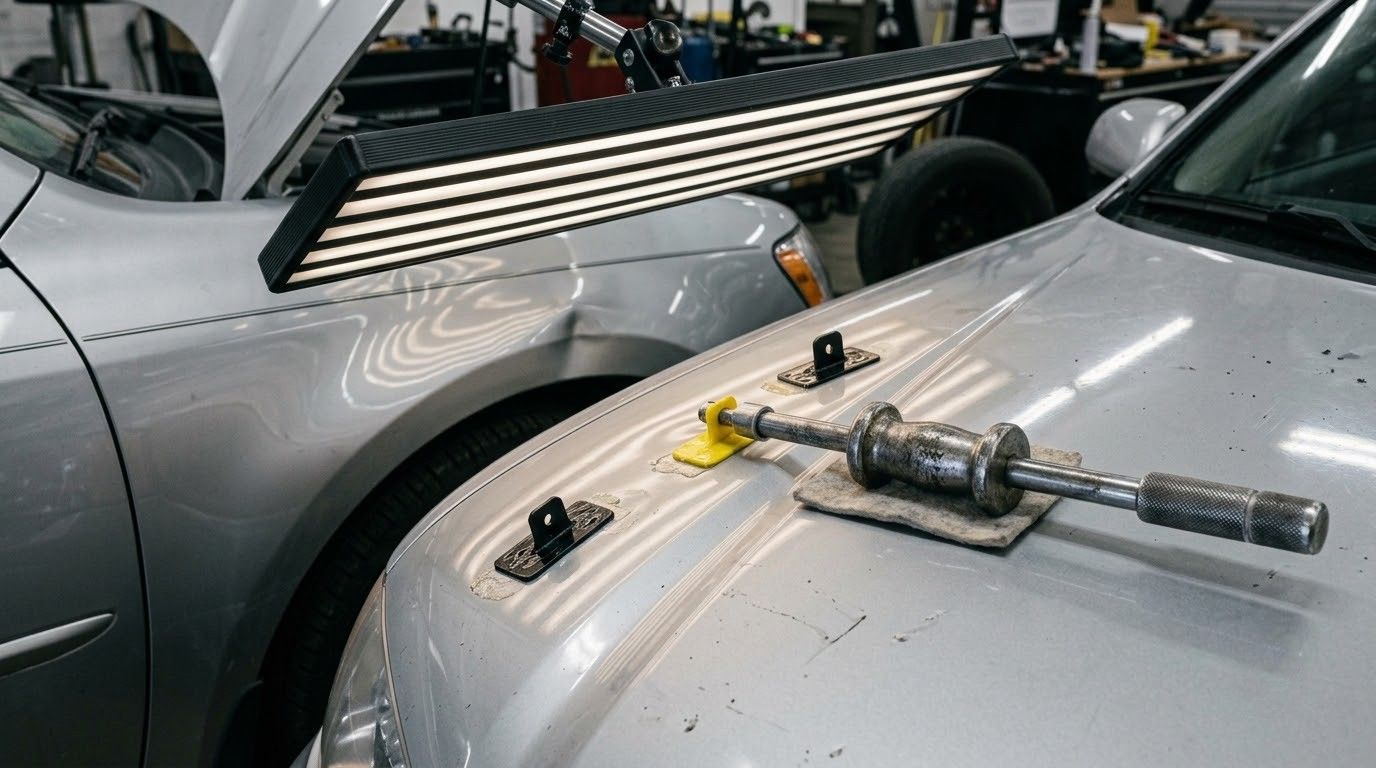
HOOD WORK
Hood and Fender Repair
Hoods have a double-layer structure that limits rod access, so glue pulling carries much of this work. Fenders are more forgiving, though impacts near the wheel arch and body line need slower, lighter passes.
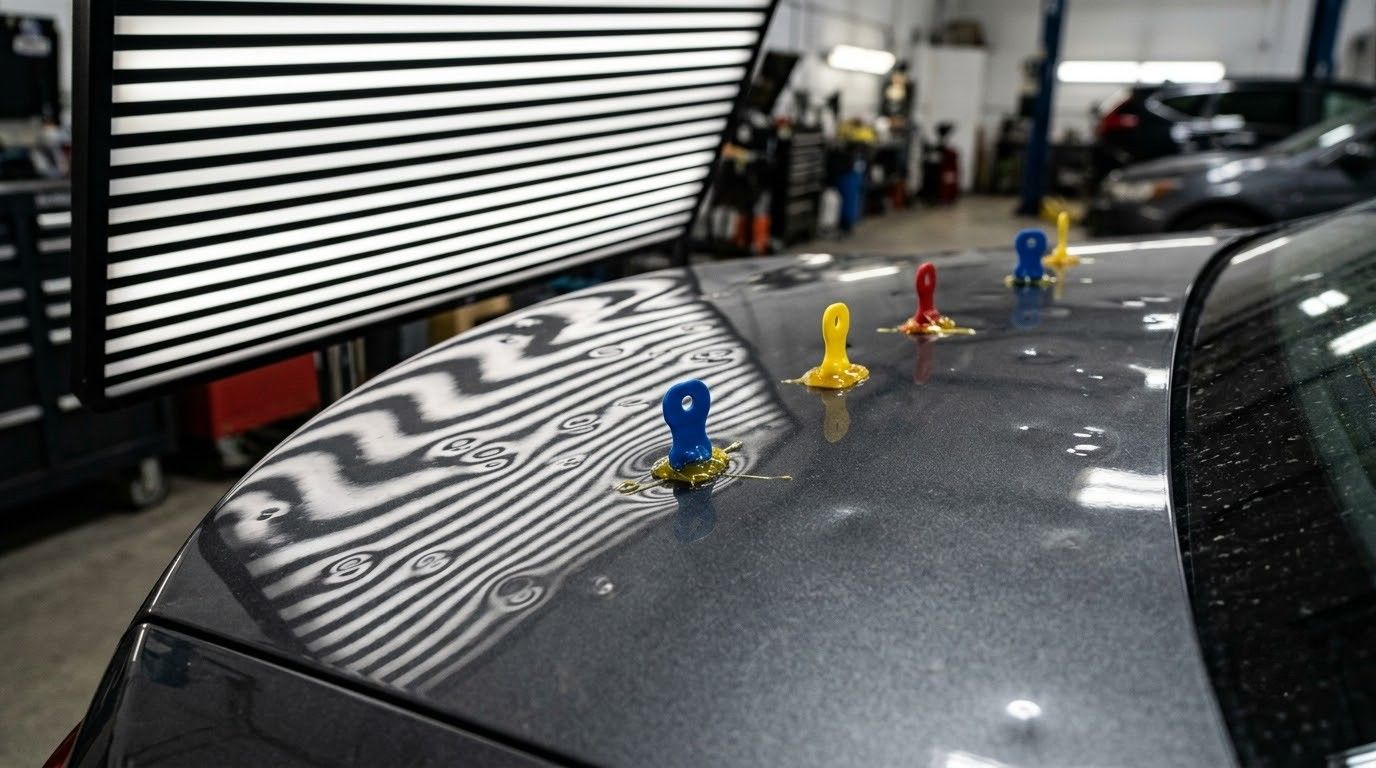
TRUNK LIDS
Trunk Lids and Tailgates
Rear decks and tailgates hold reinforcement bracing directly behind the skin. We work around those braces, using tab lifting where a rod cannot reach, and read each pass under light before moving to the next impact.
SIDE PANELS
Doors and Quarter Panels
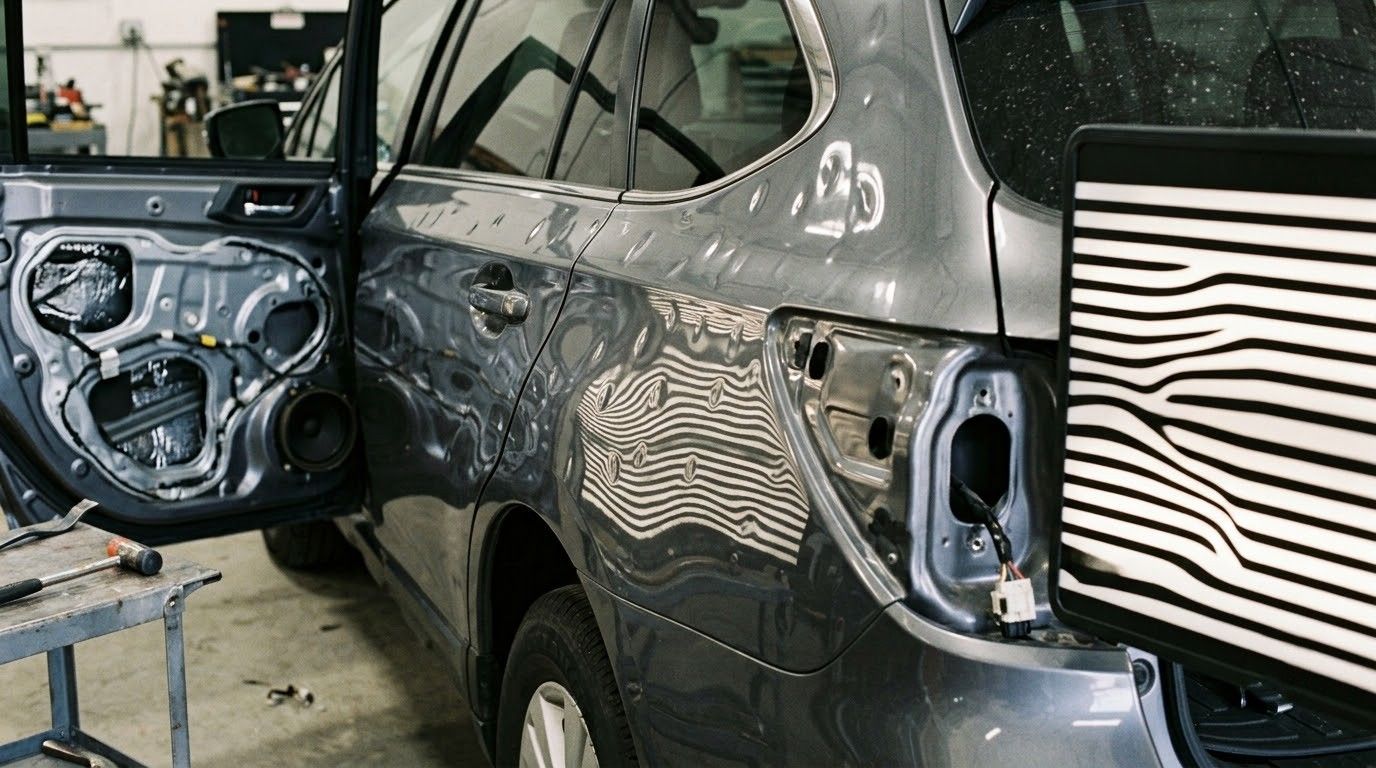
Wind-driven hail hits vertical surfaces at an angle, leaving oval dents rather than round ones. Doors open up from inside once trim is removed, while quarter panels often require patient access through taillight cavities.
CLAIM SUPPORT
Insurance Documentation
Adjusters need a defensible dent count. We photograph and log every impact by panel, supply the paperwork in the format your carrier expects, and stay involved through supplements if additional damage surfaces during the repair.
STORM INSPECTION
Post-Storm Damage Inspection
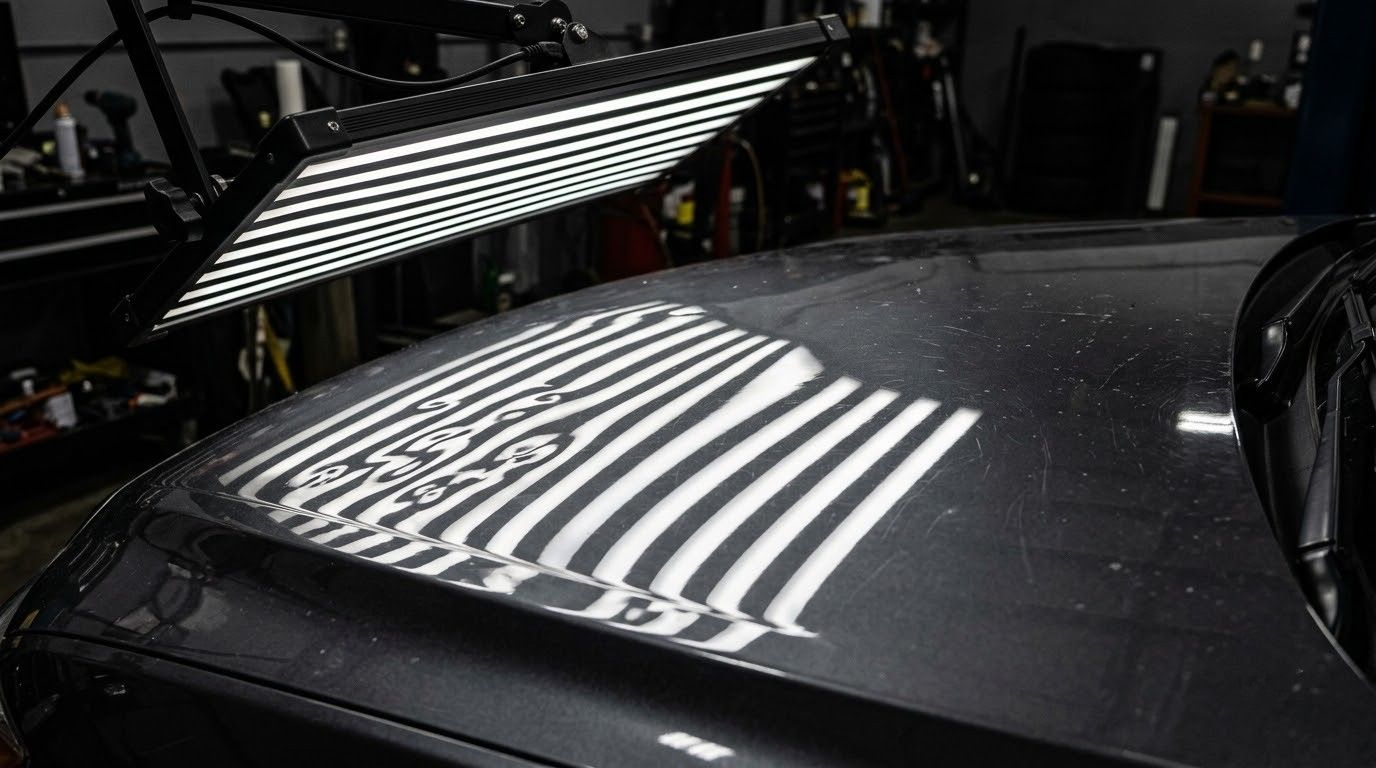
Not every vehicle caught in a storm is worth a claim. A controlled-light inspection tells you what is actually there before you file, so the decision is based on a real dent count rather than a guess.
Common Questions
FREQUENTLY ASKED QUESTIONS.
Storm damage brings its own set of questions, most of them about insurance and about what is genuinely repairable. These are the ones drivers ask us most in the weeks after a cell moves through.
Can every hail dent be repaired with paintless dent repair?
Many hail dents qualify when the factory paint remains intact and the metal has not been severely stretched. Dents along panel edges, sharp impacts, cracked paint, and refinished panels may require an in-person inspection before the best method is determined.
Should I request an estimate before contacting my insurance company?
Text detailed photos first to better understand the visible damage and estimated repair cost. Hail damage is commonly handled through comprehensive coverage, but deductibles, coverage limits, and claim requirements vary by policy, so confirm those details with your insurance provider.
Why can a hail damage estimate change after an in-person inspection?
Hail dents are difficult to see in photographs or direct sunlight, especially across roofs, hoods, and bodylines. A controlled-light inspection may reveal extra dents, limited panel access, or trim needing removal, allowing the estimate to reflect the complete repair.
What size hail actually dents a vehicle?
The National Weather Service treats 1 inch, about quarter size, as the severe threshold, and that is roughly where sheet metal starts marking. Smaller stones can still dent softer aluminum panels when wind drives them hard enough sideways.
Which panels usually take the worst hail damage?
Horizontal surfaces absorb the most: roof first, then hood and trunk lid. Vertical panels such as doors and quarter panels escape with lighter damage unless strong wind angles the stones, which happens more often than most drivers expect.
Does hail damage need to be repaired right away?
There is no mechanical urgency when paint is unbroken, but claim deadlines are real and vary by carrier. On Point PDR sees plenty of Morrisville, PA drivers wait months, then discover their filing window closed. Check your policy dates early.
Does repairing a hail-damaged roof require dropping the headliner?
Often, at least partially. Reaching the back of a roof skin means loosening headliner edges, trim, or grab handles, and we remove only what access genuinely requires, then reinstall everything to the original fit before the vehicle leaves.
How is hail damage documented for an insurance claim?
Each panel is inspected under a light board and every impact is counted and photographed. On Point PDR has been building that record for adjusters across Morrisville, PA for 14 years, and we file supplements when hidden damage appears.
HOW WE WORK
FROM FIRST PHOTO TO FINAL LIGHT CHECK, HERE IS HOW.
STEP 01
WE READ YOUR PHOTOS
You text wide shots and close-ups of the damaged panels along with your year, make, and model. We come back the same day with an initial estimate and an honest read on whether paintless repair fits.
STEP 02
WE MAP THE VEHICLE
In person, every panel goes under a controlled light board. Each dent is counted, measured for depth, and logged by location, which turns a vague storm claim into a documented repair scope your carrier can act on.
STEP 03
WE HANDLE THE CLAIM SIDE
Your documentation goes to the adjuster in the format the carrier expects. If the insurer wants an inspection, we coordinate it, and if hidden damage appears later, we file the supplement rather than leaving it to you.
STEP 04
WE PLAN PANEL ACCESS
Before a tool touches metal, we decide how each panel opens up. Trim, liners, and lamps come out only where reaching the back of the skin genuinely requires it, and every fastener is accounted for.
STEP 05
WE WORK THE METAL
Rods push from behind, glue tabs lift from the front, and both move the panel in fractions. Each dent is checked under the light board as it comes up, so high spots get tapped down before we move on.
STEP 06
WE REASSEMBLE AND VERIFY
Trim goes back exactly as the factory fitted it, and the finished vehicle gets a final light pass across every repaired panel. You see the reflection run straight before the keys change hands.
GET YOUR FREE ESTIMATE
FIND OUT WHAT THE STORM REALLY DID, FREE.
A hail estimate should start with an honest dent count, not a sales pitch. Text detailed photos of the affected panels along with your year, make, and model, and we will send back a same-day estimate.
WHAT YOUR HAIL ESTIMATE COVERS:
- A same-day figure from your texted photos
- A clear verdict on paintless repair suitability
- A documented dent count by panel
- Claim paperwork your adjuster can use
- Mobile or in-shop scheduling options
- Lifetime warranty on the completed work